
English
#NEWS ·2026-06-02
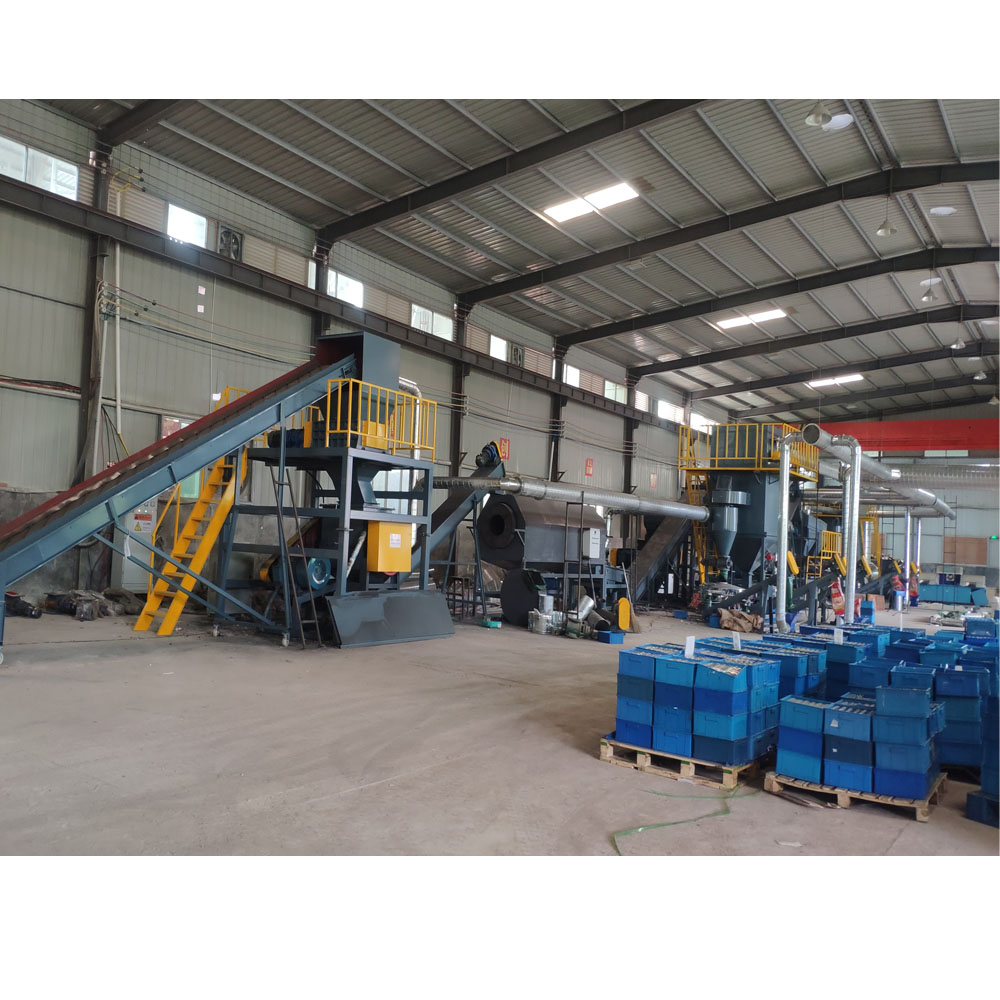
As the new energy sector surges forward, a tidal wave of retired power batteries is fast approaching. Faced with massive quantities of spent lithium-ion batteries, crude dismantling not only wastes valuable resources but also poses serious safety hazards. With deep expertise in solid waste treatment, Jiangxi Mingxin has developed a spent lithium-ion battery crushing and recycling process characterized by high purity, high recovery rates, and exceptional safety—offering a golden key to unlocking the “urban mine.” What sets this system apart in the market is its hardware strength across the entire process, from pretreatment to fine sorting.
Safe Pretreatment: The Art of Shredding and Live Battery Crushing
The primary challenge in spent battery recycling is safety. Crushing live batteries can easily cause short circuits and fires. Mingxin’s production line addresses this upfront with robust safeguards. The system employs a fully automatic live-cell crusher, eliminating the need for traditional saltwater discharge processes and feeding batteries directly into the shredding chamber. Its core advantages include a low-speed, high-torque mechanical design, coupled with advanced nitrogen protection and real-time oxygen monitoring, ensuring that temperatures remain below combustion levels during shredding. Meanwhile, a unique sealing structure effectively prevents electrolyte vapors from escaping, solving fugitive emissions at the source.
High-Purity Black Mass Separation: Multi-Disciplinary Sorting at the Core
After crushing, efficiently separating black mass (anode and cathode materials) from copper and aluminum foils is key to economic returns. Mingxin’s hammer crusher and air classifier combination excels in this regard.
Precise Black Mass Liberation: High-speed rotating hammers create a vortex stripping effect. Combined with vibrating screening and cyclone collectors, the system utilizes gravity and centrifugal force differences to thoroughly separate black mass from foils, which is then rapidly collected via a negative-pressure system. This equipment achieves a black mass recovery rate and purity exceeding 95%, significantly reducing metal contamination in the black mass.
Eddy Current Separation: For the remaining copper-aluminum mixture, Mingxin uses a high-intensity eddy current separator. Its adjustable magnetic roller speed and stable magnetic field strength accurately identify and eject copper and aluminum based on their conductivity differences, achieving a sorting purity of up to 99% while replacing energy-intensive, high-pollution chemical separation processes.
Dual Environmental Closed-Loop: Containing Dust and VOCs
Dry crushing processes often struggle with dust emissions. Mingxin’s solution features a full-line, high-efficiency pulse-jet baghouse dust collector combined with an activated carbon/catalytic combustion unit. A micro-negative pressure dust collection system captures dust-laden air generated during crushing, grinding, and screening. After high-precision filtration, ultra-clean emissions are achieved. This physical and adsorption-based approach not only completely resolves dust issues but also effectively removes VOCs from evaporated electrolytes, meeting the most stringent environmental standards.
Lowering Copper & Aluminum Oxidation Rates, Enhancing Downstream Leaching Efficiency
The underlying principle is that equipment serves the process, and the process serves value. Mingxin’s equipment combination is not a simple stack of machines. Through seamless integration of the shredder, crusher, grinder, screen, and sorter, precise morphological control is achieved. By adjusting the crusher screen aperture, the black mass particle size is tightly controlled, preventing over-grinding and oxidation of copper and aluminum. This significantly enhances leaching efficiency in downstream hydrometallurgical processes, saving customers substantial chemical reagent costs.
No.15, Xinye Avenue, South District,Huangbu Industrial Zone, ShangYou County, Jiangxi Province, China

top